
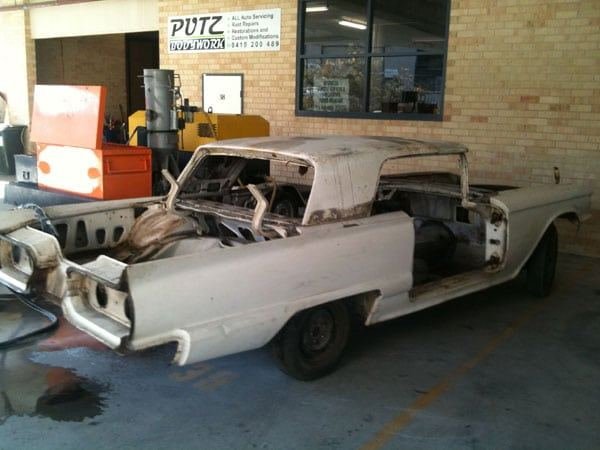
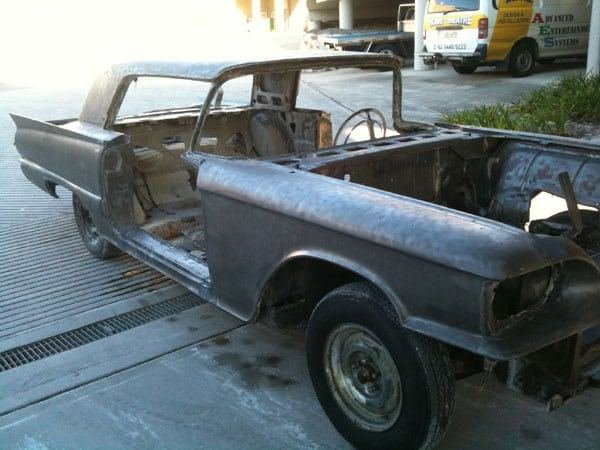
Traditional abrasive blasting cuts a coating off with hard media such as sand, garnet or steel grit. Soda blasting does the same job with a soft media that shatters on impact, and that difference changes what you can safely blast.
For thin metal, soft metals, fibreglass, timber, brick and anything with glass or rubber attached, soda is usually the better choice. For thick rust and heavy industrial coatings on structural steel, harder media still wins.
Here is an honest comparison, so you can see which method suits your job before you book.
How soda differs from sand and grit
Sand, garnet and steel grit are hard, angular and reusable. They cut through coatings quickly and leave a rough profile on the metal, which is useful for some industrial paint systems but damaging on panels, soft metals and masonry.
Sodium bicarbonate crystals are soft and break apart on impact. The energy released lifts the coating away instead of grinding into what is underneath, so the original surface keeps its shape and finish.
Advantages of soda blasting
These are the benefits customers notice most on cars, boats, homes and equipment.
- → No pitting, etching or profile on metal, glass, chrome, fibreglass or timber
- → No heat build-up, so thin panels and bonnets do not warp
- → Glass, rubber seals and chrome can often stay in place with masking
- → Strips and degreases in one pass
- → Water soluble, so clean-up is a rinse rather than sweeping up tonnes of sand
- → Contains no crystalline silica
- → Gentle enough for soft metals such as aluminium heads and mag wheels
Where traditional blasting is better
Soda is not the answer to everything. It is slower on thick rust, mill scale and heavy epoxy or industrial coatings on hard steel, where sandblasting or dustless blasting gets to bare metal faster and at lower cost.
Soda is also used once and is not recycled like steel grit, so on very large industrial surfaces the media cost can be higher. Craig will tell you which method is the more economical one for your job.
Painting after soda blasting
Because soda does not leave a profile, some coating systems need a primer designed for smooth or bare metal. Soda residue must also be rinsed off before any primer goes on, or the new paint may not bond properly.
Soda Tec rinses every job down and will explain what preparation your painter or panel beater needs before the next coat.
Soda vs traditional blasting, answered.
Still unsure? Call Craig on 0407 070 464 and describe the job.
Is soda blasting better than sandblasting?
For delicate surfaces, yes: cars, boats, brick, timber, aluminium and anything with glass or chrome attached. For heavy rust on structural steel, sandblasting is usually faster and cheaper.
Does soda blasting remove rust?
Soda removes light surface rust and staining, but it does not cut out pitted or heavy rust. For that, dustless blasting or sandblasting is the better choice.
Does soda blasting warp car panels?
No. Soda generates almost no heat and runs at lower pressure than sandblasting, so thin panels stay flat.
Can I paint straight after soda blasting?
Not straight away. The surface must be rinsed to remove soda residue first, and some paint systems need a suitable primer because soda leaves no profile.