
Mobile dustless blasting mixes water and media in the hose, so the dust is trapped before it leaves the nozzle. That makes it the go-to method for working in public, beside occupied buildings, or anywhere a dust cloud would stop the job.
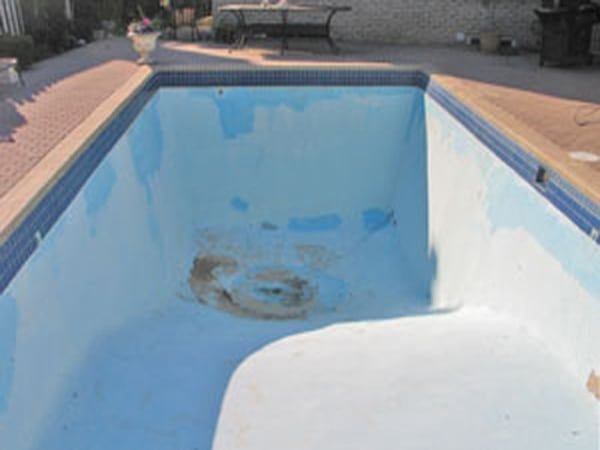
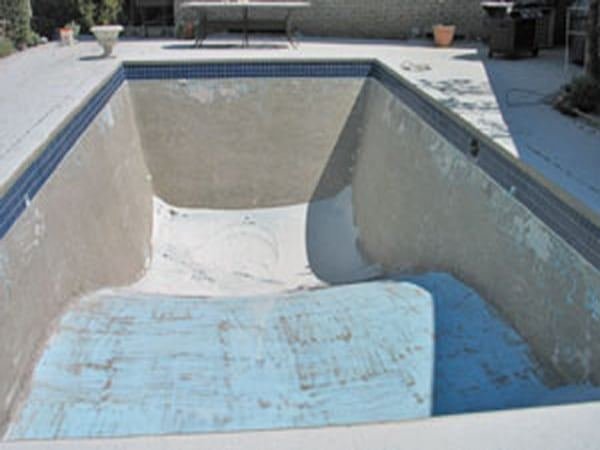
Because there’s no airborne dust, we can blast pools in backyards, facades on busy streets and machinery inside working sheds without shutting everything down around us.
The water also keeps the surface cool — no heat build-up, no warping, and no sparks, which is why dustless is safe on fuel tanks and enclosed spaces.
How dustless blasting works →Where dustless blasting is the right call
Dustless blasting is chosen when dust would be the problem: a pool in a backyard surrounded by neighbours, a strata car park, a shopfront on a busy street, or a shed full of stock. The water traps dust at the nozzle, so work can carry on near people and property.
It is also chosen for heat and spark risk. Wet blasting generates no friction heat and no sparks, so it is used on fuel tanks, thin panels and inside enclosed spaces.
Media and finish
Dustless blasting can carry soft or hard media. Glass, garnet or crushed media is used on steel and concrete where a profile is needed for the next coating; softer media is used on brick and timber.
Bare steel will start to flash rust once wet, so an inhibitor is added and priming is planned for soon after. Pools and masonry are left clean and ready for the resurfacer or sealer.
The blast yard comes to you.
Quote, protect, strip.
Mask & contain
Drains, gardens and windows are covered, and a catchment is set up for the slurry.
Wet blast
Media and water leave the nozzle together, stripping coatings while the water holds the dust down.
Inhibit & rinse
Steel gets a rust inhibitor in the rinse water. The slurry is collected and the area washed down.
Mobile dustless blasting for…
On site beats on a truck.
Soda Tec mobile
Blast yard
Mobile dustless blasting across Sydney & NSW.
From the CBD to the Central Coast, Newcastle, Wollongong and regional NSW — travel is priced into your quote up front.
It’s dust-suppressed. Water encapsulates the media so there’s no drifting cloud — what’s left falls close to the work area as a damp slurry we collect.
We add a rust inhibitor to the water on steel jobs, which holds off flash rust long enough for you to prime.
Yes. The pool is drained, but the surrounding yard stays clean — the slurry stays in the shell and is removed when we’re done.
No. The rig carries its own water tank. On very large jobs mains water may be used if it is close.
The slurry falls close to the work area and is collected. The area is rinsed when the job is done.
Related mobile services
Book a free onsite quote.
Tell us what needs stripping and where it is. Craig will come and look, test the surface, and give you a fixed price.